
Dr. Oscar Jarzmik
Honors B.A., M.A., Ph.D. (History – Middle East Studies)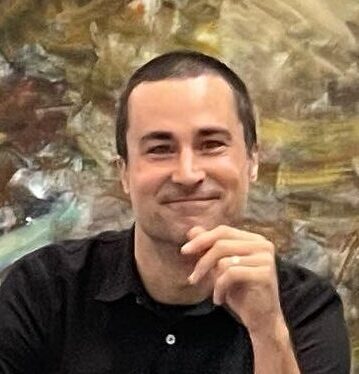
Subject: Language Arts
What will my child walk away with? Students develop the ability to read critically, think across disciplines, and engage with ideas about power, culture, and society — skills I built through doctoral research on the politics and intellectual history of the modern Middle East. My classes ask students to think about why things are the way they are, not just what they are. I believe that this approach fosters curiosity, analytical thinking, and a more nuanced understanding of the world.
What can families expect? An enthusiastic, interactive classroom where students are treated as capable of genuine intellectual engagement. I use an interdisciplinary approach that draws on history, political thought, and cultural analysis to make language arts feel connected to the real world.
What does class actually feel like? Dynamic and discussion-driven. I use questions, scenarios, and texts that require engaged thinking, and I encourage students to challenge ideas, including my own.
How do you challenge a curious mind? By asking better questions, not just assigning harder texts. I push curious students to think deeper: What assumptions underlie this argument? Whose perspective is missing? How might the interpretation change if we approached it differently? These are the kinds of questions that truly stretch a capable student.
Credentials and Experience: I earned a PhD in the history and sociology of the modern Middle East (Near and Middle Eastern Civilizations) from the University of Toronto, as well as an MA and undergraduate degree from York University. I’ve taught courses on Middle Eastern and Arab history at both the University of Toronto and Toronto Metropolitan University. Before joining Brain Power, I worked in journalism because I believe knowledge shouldn’t stay behind university walls and inaccessible academic journals. It belongs in public conversation, helping people make sense of the world and participate meaningfully in civic life.That belief shapes how I approach teaching: critically engaging students is about preparing students to think independently, question what they encounter, and take part in those broader conversations.
Why Oscar? Why Brain Power?
My research trained me to dig beneath the surface of complex texts and situations, asking why things are the way they are and how ideas fit together. That’s exactly the skill I help my students develop. Brain Power’s emphasis on critical thinking over rote recall fits naturally with the way I have always approached teaching.